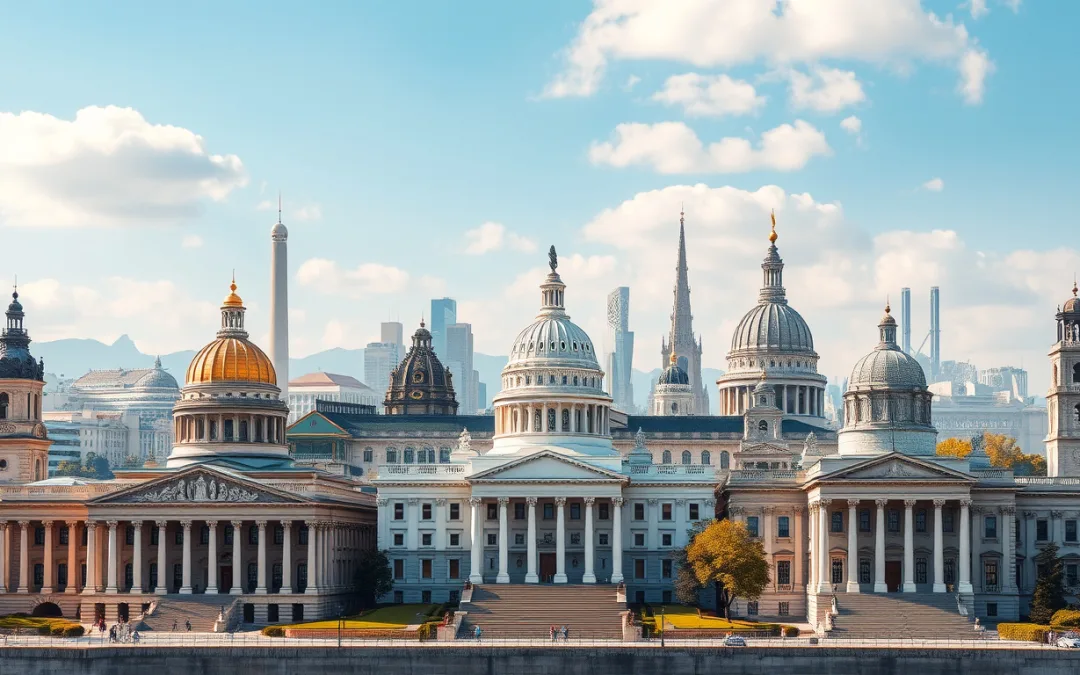
Government buildings are more than just structures; they are the physical embodiment of a nation’s identity, history, and authority.

These architectural wonders serve a variety of functions—from housing legislative bodies to providing essential services to citizens.

As we delve into the fascinating world of government buildings, we will explore their distinctive architectural styles, notable examples across the globe, and the profound historical significance they hold.

Additionally, we will examine the role these buildings play in modern society and the efforts being made to preserve their heritage for future generations.

Join us on this journey through time and design, as we uncover the stories behind the iconic structures that symbolize governance and civic life.

Blind Solutions Consultancy Packages Available

Exploring Iconic <b>Government Buildings</b>: Architectural Wonders and Historical Significance’ style=’display: block; margin: auto; max-width: 100%; height: auto;’></p><h2>Key Takeaways</h2><ul><li><b>Government buildings</b> are not just functional spaces; they are often architectural masterpieces that reflect cultural values.</li><li>Various architectural styles, such as neoclassical and modernist, are represented in the design of iconic <b>government buildings</b>.</li><li>Prominent examples, like the U.S. Capitol and the Palace of Westminster, emphasize the importance of government architecture worldwide.</li><li><b>Government buildings</b> hold historical significance as they often symbolize national identity and political heritage.</li><li>The preservation of these structures is vital for their role in modern society and for future generations to appreciate their historical context.</li></ul><h3>Introduction to <b>Government Buildings</b></h3><p><b>Government buildings</b> are essential structures within a city or town, serving as the physical manifestations of civic administration and governance.</p><p>They house various governmental functions, from legislative chambers where laws are debated and enacted to administrative offices that manage public services.</p><p>These buildings not only reflect the architectural styles of their respective eras but also symbolize the principles and values of the society they serve.</p><p>Typically, <b>government buildings</b> are strategically located to be accessible to the public, reinforcing transparency and encouraging civic engagement.</p><p>Understanding the role and significance of <b>government buildings</b> helps citizens appreciate the importance of these structures in facilitating democratic processes and ensuring effective governance.</p><h3>The Architectural Styles of Iconic <b>Government Buildings</b></h3><p><b>Government buildings</b> are more than just functional spaces; they are symbols of power, culture, and history.</p><p>Across the globe, architectural styles of iconic <b>government buildings</b> reflect the values and eras in which they were constructed.</p><p>From the neoclassical grandeur of the Capitol Building in Washington, D.C., with its majestic dome and intricate details, to the modernist lines of the Sydney Opera House, which defy traditional elements with its innovative design, each structure tells a story about the governmental philosophy of its time.</p><p>Countries often choose architectural styles that evoke a sense of stability and permanence, such as the Romanesque revival seen in many city halls, while others may opt for contemporary styles that signal progress and accessibility.</p><p>The juxtaposition of these diverse styles in <b>government buildings</b> not only attracts tourists and historians but also fosters civic pride among citizens, illustrating the deep connection between architecture and national identity.</p><blockquote><p>‘Architecture is the will of an epoch translated into space.’ – Ludwig Mies van der Rohe</p></blockquote><p><a href=Blind Solutions Consultancy Packages Available

Notable Examples of <b>Government Buildings</b> Around the World’ style=’display: block; margin: auto; max-width: 100%; height: auto;’></p><h3>Notable Examples of <b>Government Buildings</b> Around the World</h3><p><b>Government buildings</b> serve not only as functional structures for political and administrative purposes but also as symbols of national identity and architectural heritage.</p><p>Around the globe, various notable <b>government buildings</b> stand out due to their unique designs and historical significance.</p><p>One prime example is the United States Capitol in Washington, D.C., a majestic building characterized by its iconic dome and neoclassical architecture, which houses the legislative chambers of Congress.</p><p>Similarly, the Palace of Westminster in London, famous for its Gothic Revival style and the Big Ben clock tower, is a critical site for the British Parliament.</p><p>In contrast, the Palais Bourbon in Paris, the home of the French National Assembly, showcases a more classical architectural style with its lavishly adorned façade.</p><p>Meanwhile, in Japan, the Tokyo Metropolitan Government Building combines modern design with functionality, offering a striking contrast to the traditional structures nearby.</p><p>These <b>government buildings</b> not only reflect their respective nations’ political systems but also serve as key tourist attractions, drawing visitors eager to witness their beauty and historical importance.</p><h3>Historical Significance of <b>Government Buildings</b></h3><p><b>Government buildings</b> play a pivotal role in shaping the cultural and political landscape of a nation.</p><p>These structures are not merely functional spaces for administration; they embody the history, values, and aspirations of the society they serve.</p><p>From the grandiosity of the U.S.</p><p>Capitol in Washington D.C.</p><p>to the intricate carvings of the Palace of Westminster in London, the architectural designs of <b>government buildings</b> reflect the era in which they were constructed and the ideologies they represent.</p><p>Historically, these edifices have hosted significant events, such as the signing of treaties and the formulation of laws, thereby influencing the course of a country’s governance and its relationship with the citizens.</p><p>Furthermore, the preservation of these buildings helps to maintain a tangible connection to the past, allowing future generations to appreciate the monumental decisions made within their walls.</p><p>Through tours, public events, and educational programs, <b>government buildings</b> not only serve as reminders of historical significance but also as platforms for civic engagement and national pride.</p><p><img data-lazyloaded="1" src="data:image/gif;base64,R0lGODdhAQABAPAAAMPDwwAAACwAAAAAAQABAAACAkQBADs=" data-src=