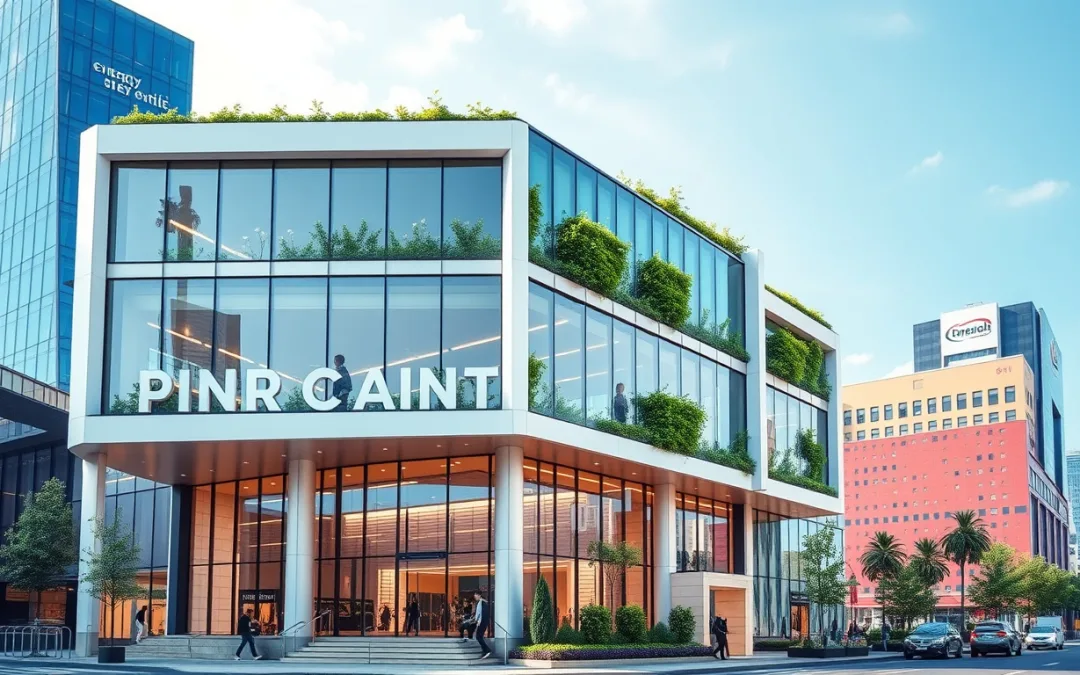
In today’s fast-paced and competitive business environment, the design and functionality of commercial buildings play a crucial role in the success of any organization.

As more companies recognize the importance of creating spaces that are not only efficient but also aesthetically appealing, the focus on maximizing both aspects becomes paramount.

This article explores essential strategies for achieving optimal efficiency and visual appeal in commercial buildings, from understanding design principles to integrating advanced technology and sustainable practices.

By examining successful case studies and future trends, you will gain valuable insights into crafting workspaces that enhance productivity and provide an inviting atmosphere for employees and clients alike.

Blind Solutions Consultancy Packages Available

Maximizing Efficiency and Aesthetic Appeal in <b>Commercial Buildings</b>‘ style=’display: block; margin: auto; max-width: 100%; height: auto;’></p><h2>Key Takeaways</h2><ul><li>Efficiency in <b>commercial buildings</b> significantly impacts operational costs and environmental sustainability.</li><li>Aesthetic design principles enhance not only the visual appeal of commercial spaces but also employee productivity.</li><li>Integrating smart technology can optimize building performance and streamline operations significantly.</li><li>Sustainable practices, such as energy-efficient materials and green roofs, enhance both functionality and aesthetics.</li><li>Future trends indicate a growing emphasis on biophilic design and smart buildings to create more engaging commercial environments.</li></ul><h3>Understanding the Importance of Efficiency in <b>Commercial Buildings</b></h3><p>Efficiency in <b>commercial buildings</b> is a critical factor that touches on energy consumption, operational costs, and environmental responsibility.</p><p>Understanding the importance of efficiency in <b>commercial buildings</b> not only enhances sustainability but also contributes to significant cost savings over time.</p><p>With rising energy prices and increasing regulatory pressures, organizations are compelled to invest in energy-efficient technologies and practices.</p><p>This involves optimizing HVAC systems, utilizing smart lighting solutions, and implementing energy management systems that monitor usage patterns.</p><p>By prioritizing efficiency, <b>commercial buildings</b> can reduce their carbon footprint while creating a comfortable and productive environment for tenants and employees.</p><p>Moreover, energy-efficient buildings often experience higher market values and attract tenants seeking lower operating costs, thus highlighting the multifaceted benefits of integrating efficiency into the design and management of commercial real estate.</p><h3>Key Design Principles for Aesthetically Pleasing Commercial Spaces</h3><p>Designing aesthetically pleasing <b>commercial buildings</b> requires a nuanced understanding of several key design principles that not only enhance the visual appeal of a space but also improve functionality and user experience.</p><p>Firstly, balance is essential; it ensures that the elements within the space are distributed harmoniously, guiding the eye smoothly throughout the area.</p><p>Next, consider the importance of color schemes.</p><p>The right palette can evoke emotions and atmosphere, influencing how customers perceive a brand.</p><p>Furthermore, incorporating natural light is vital in <b>commercial buildings</b>, as it significantly affects mood and productivity, creating an inviting environment.</p><p>Additionally, the use of materials should be both practical and visually engaging; combining textures can create depth and interest in the design.</p><p>Lastly, functionality should never be overlooked; a beautiful space must also serve its purpose efficiently.</p><p>By adhering to these principles, architects and designers can create stunning <b>commercial buildings</b> that attract customers and foster positive experiences.</p><blockquote><p>‘Simplicity is the ultimate sophistication.’ – Leonardo da Vinci</p></blockquote><p><a href=Blind Solutions Consultancy Packages Available

Integrating Technology for Enhanced Building Performance

Integrating Technology for Enhanced Building Performance

In today’s fast-paced world, integrating technology has become a cornerstone for enhancing the performance of commercial buildings.

By embracing advancements such as smart sensors, automated systems, and energy management software, property owners and managers can significantly improve operational efficiency and reduce energy costs.

These technologies allow for real-time monitoring and analysis of various building systems, leading to proactive maintenance and optimized resource usage.

Furthermore, integrating technologies like Building Information Modeling (BIM) enables a more seamless design process, while IoT devices facilitate better communication between systems, enhancing user experience and comfort.

As businesses increasingly prioritize sustainability and efficiency, leveraging technology in commercial buildings is not just beneficial—it’s essential for staying competitive in the market.

Sustainable Practices that Improve Functionality and Appearance

In the ever-evolving landscape of architectural design, sustainable practices have emerged as essential elements that not only enhance the functionality of commercial buildings but also elevate their overall aesthetic appeal.

Incorporating green roofs, for instance, not only provides insulation and reduces energy consumption but also introduces greenery that beautifies urban environments.

Similarly, the use of energy-efficient lighting and HVAC systems not only reduces operational costs but also significantly diminishes a building’s carbon footprint, making it a more attractive option for eco-conscious tenants and visitors.

Choosing sustainable materials, such as recycled steel or bamboo, not only contributes to a building’s durability but also adds a unique visual contrast that can set a structure apart.

Together, these practices lead to the creation of commercial buildings that not only meet the demands of functionality and compliance but also resonate with the growing public preference for sustainable design, ultimately fostering a more harmonious relationship between architecture and the environment.

Case Studies: Successful <b>Commercial Buildings</b> that Balance Efficiency and Aesthetics’ style=’display: block; margin: auto; max-width: 100%; height: auto;’></p><h3>Case Studies: Successful <b>Commercial Buildings</b> that Balance Efficiency and Aesthetics</h3><p>In the realm of architecture, the intersection of efficiency and aesthetics plays a pivotal role in the design of modern <b>commercial buildings</b>.</p><p>Several case studies exemplify how innovative strategies can achieve both functional performance and visual appeal.</p><p>For instance, the Bullitt Center in Seattle, often dubbed the ‘greenest commercial building in the world,’ is a prime example where sustainability and beauty coalesce.</p><p>This building not only utilizes renewable energy and rainwater harvesting but also features a stunning façade that integrates natural materials with cutting-edge design.</p><p>Similarly, the Edge in Amsterdam showcases a perfect blend of smart technology and striking architecture, earning its title as one of the most sustainable office buildings worldwide.</p><p>These successful <b>commercial buildings</b> highlight that investing in energy efficiency and aesthetic considerations can enhance not only the sustainability of an environment but also promote a positive experience for its occupants.</p><h3>Future Trends in Commercial Building Design and Construction</h3><p>As we look towards the future of <b>commercial buildings</b>, several key trends are emerging that are set to redefine the landscape of design and construction.</p><p>First and foremost, sustainability is at the forefront of this evolution.</p><p>With increasing awareness of climate change, architects and builders are prioritizing eco-friendly materials and energy-efficient technologies.</p><p>This trend not only reduces the carbon footprint of <b>commercial buildings</b> but also lowers operating costs for businesses.</p><p>Furthermore, the integration of smart technology is transforming how these spaces function; from automated lighting and climate control systems to advanced security measures, <b>commercial buildings</b> are becoming increasingly interconnected and responsive to their occupants’ needs.</p><p>Additionally, the rise of modular construction methods is streamlining the building process, reducing waste, and accelerating timelines, which is particularly advantageous in today’s fast-paced market.</p><p>Lastly, the emphasis on creating flexible and versatile spaces is changing how business environments are structured, accommodating the shift towards remote work and collaborative spaces.</p><p>Together, these trends are paving the way for innovative, efficient, and adaptable <b>commercial buildings</b> that meet the demands of a changing world.</p><h2>Frequently Asked Questions</h2><h3>What are the primary benefits of maximizing efficiency in <b>commercial buildings</b>?</h3><p>Maximizing efficiency in <b>commercial buildings</b> leads to reduced operational costs, enhanced environmental sustainability, improved employee productivity, and a better overall experience for occupants and visitors.</p><h3>What key design principles should be considered for creating aesthetically pleasing commercial spaces?</h3><p>Key design principles include utilizing a cohesive color palette, ensuring good lighting, incorporating natural elements, optimizing space for functionality, and matching the design to the brand identity of the business.</p><h3>How can technology be integrated to enhance building performance in <b>commercial buildings</b>?</h3><p>Technology can be integrated through smart building systems that monitor energy use, automated lighting and HVAC controls, advanced security systems, and building management software that improves operational efficiency.</p><h3>What sustainable practices can improve both functionality and appearance in <b>commercial buildings</b>?</h3><p>Sustainable practices include using energy-efficient materials, implementing green roofs or living walls, utilizing renewable energy sources, and designing for natural ventilation to enhance indoor air quality.</p><h3>What future trends are emerging in the design and construction of <b>commercial buildings</b>?</h3><p>Future trends include the increasing use of biophilic design, modular construction methods, greater emphasis on health and wellness, smart city integration, and adaptive reuse of existing structures for sustainability.</p><p>Web :https://blindsolutions.co.za<br />Tel: +27 11 795-4200<br />Email: sales@blindsolutions.co.za<br />Whatsapp: +27 82 778 4372</p>
<br /><a href=